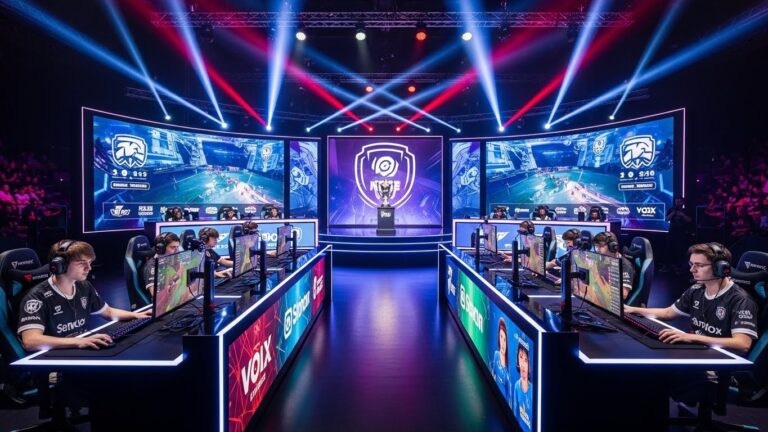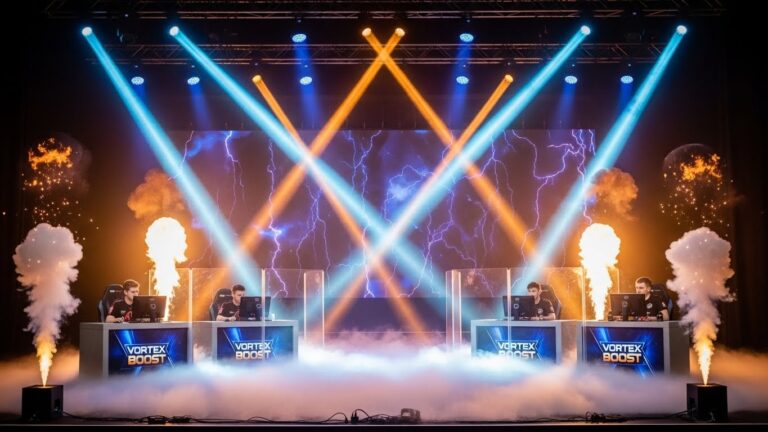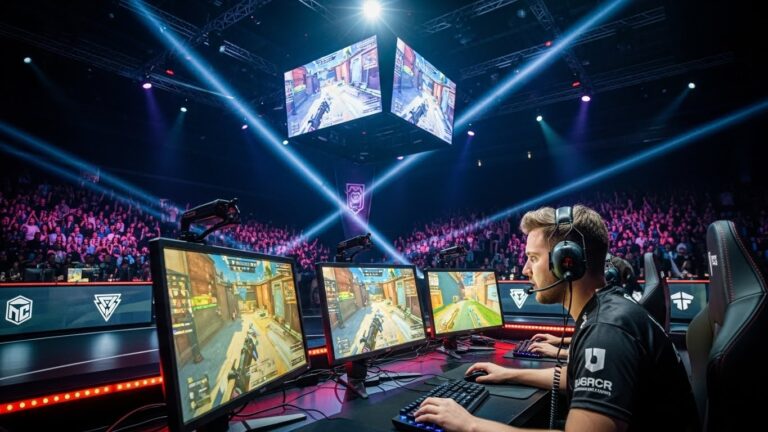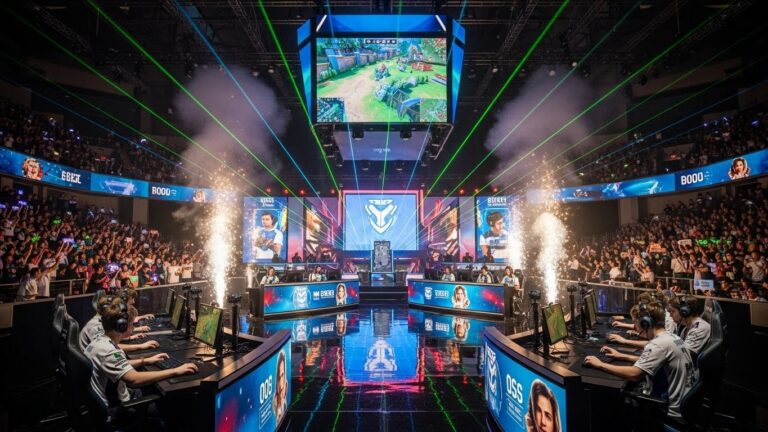

In the world of esports, competition is only one part of the spectacle. The other half—the part that makes fans’ jaws drop and cameras flash—is the production design. From dazzling stages to synchronized light shows, from holographic champions to immersive digital effects, esports finals have transformed into breathtaking audiovisual experiences.
What once began as small-scale LAN events in dark rooms has evolved into global stadium spectacles rivaling the grandeur of the Olympics or the Super Bowl. Production design now defines the identity of esports, transforming digital battles into real-world art. Every major final—whether it’s League of Legends, Dota 2, or Valorant—tells its story not only through gameplay but through the design, technology, and emotion that fill the arena.
This article dives deep into the best production designs ever seen in esports finals, exploring how artistry, engineering, and imagination merge to create unforgettable experiences for fans around the world.
The Rise of Esports Spectacle
In the early days of esports, finals were simple affairs—tables lined with monitors, a few spotlights, and modest cheering from dedicated fans. The games were the stars, and production merely set the stage. But as viewership soared and sponsorship poured in, organizers began reimagining what esports could look like on a grand scale.
Modern esports finals are now multimedia experiences. They combine traditional event production with cutting-edge digital effects, creating shows that blur the line between live sport and futuristic concert. Massive LED walls, augmented reality champions, motion-tracked cameras, and pyrotechnic synchronization are now common.
The transformation reflects not only the technological capabilities of the industry but also its cultural ambition. Esports no longer tries to imitate traditional sports—it has invented its own language of spectacle, built from digital worlds and fan imagination.
League of Legends: The Standard for Spectacle
No discussion about esports production design is complete without mentioning the League of Legends World Championship. Riot Games has consistently set the benchmark for visual innovation and live event engineering. Every year, the Worlds Finals push boundaries with new creative concepts and technological marvels.
The 2017 Worlds Final in Beijing remains one of the most iconic esports productions of all time. The event took place in the Bird’s Nest Stadium, the same venue that hosted the 2008 Olympic Games. What made it legendary was the use of augmented reality technology. As fans watched, a massive dragon—based on the game’s in-world creature, the Elder Dragon—soared above the stadium in a breathtaking 3D projection. The synchronization of lighting, pyrotechnics, and virtual imagery left viewers stunned.
In 2018, Riot took things even further in Incheon, South Korea. The opening ceremony introduced the world’s first holographic K-pop concert featuring the virtual band K/DA. The performance blended real dancers and singers with virtual champions rendered live on stage. It wasn’t just a show—it was a declaration of what digital art and gaming could achieve together.
Each subsequent year, the League of Legends World Championship has reinvented itself with new narrative-driven production themes, such as the virtual cityscapes in Shanghai 2020 and the cosmic backdrops of 2022. Riot’s commitment to creating cinematic, story-based production ensures that every final feels like the closing chapter of a global fantasy saga.
Dota 2’s The International: A Celebration of Immersion
While League of Legends focuses on cinematic storytelling, Dota 2’s The International (TI) thrives on atmosphere and scale. Every edition of TI is known for its monumental stage design and emotional resonance.
The production design of The International is built around immersion. Massive screens stretch across the venue, displaying in-game action in cinematic widescreen format. The commentary booth, lighting rigs, and visual effects are all meticulously designed to enhance intensity and emotion. The grand stage gives players an elevated platform that makes them the center of a dramatic, almost gladiatorial experience.
The International 2019 in Shanghai stands as one of the most beautiful esports finals ever produced. The stage resembled a futuristic command center surrounded by dynamic LED structures that shifted colors and animations according to in-game events. When the match reached its final moments, the lighting pulsed in rhythm with the crowd’s energy, turning the entire arena into a living heartbeat.
Valve also incorporates fan culture deeply into its production design. Player introductions are accompanied by personalized visuals, and every winning moment is immortalized in cinematic replays that instantly become part of Dota’s history. The International doesn’t just showcase a game—it celebrates the journey of players and fans through design that feels intimate, emotional, and larger than life.
Valorant Champions: A New Era of Visual Storytelling
As a younger esport, Valorant had the advantage of learning from its predecessors. Riot Games applied its production experience from League of Legends to create an entirely new identity for Valorant’s global tournaments. The Valorant Champions Finals have quickly become known for their cutting-edge visual artistry and urban cyberpunk aesthetics.
One of the standout productions was the Valorant Champions 2022 final held in Istanbul. The stage design featured towering LED panels, vibrant neon lighting, and angular metallic structures that mirrored the futuristic architecture of the game’s world. The event opened with a cinematic sequence blending live footage with stylized game graphics, setting a new bar for immersive design.
Riot’s production team used dynamic lighting and projection mapping to shift the environment between rounds, visually representing the tension between attackers and defenders. The synchronization of visuals with in-game moments made the matches feel choreographed—an elegant dance of color, music, and motion.
Valorant’s brand identity relies heavily on sleek, modern visuals, and that design philosophy translates beautifully into its live productions. Its finals feel like a hybrid between a concert, an art exhibition, and a championship.
CS:GO Majors: Tradition Meets Modern Mastery
Counter-Strike, one of the oldest and most beloved esports, brings a different kind of production philosophy. Rather than relying heavily on fantasy or augmented reality, CS:GO events embrace authenticity, realism, and intensity. The goal is to make the audience feel the grit and adrenaline of professional competition.
The ESL and PGL Majors are famous for their masterful stage setups. The Katowice Major, in particular, has become an icon of esports production. Its design centers around immersive lighting, precision camera work, and a focus on player emotion. When a clutch play happens, the camera zooms in on the player’s face as the lights flare behind them, creating a cinematic effect that feels raw and unscripted.
The PGL Stockholm Major in 2021 marked a return to live audiences after pandemic restrictions, and its production stood as a love letter to the fans. Massive LED screens surrounded the stage, pulsating in sync with the commentary and gameplay. The lighting design adapted dynamically to the rhythm of each round, creating an emotional rollercoaster that kept viewers on edge.
CS:GO’s design may not feature holograms or fantasy visuals, but it captures something even more powerful: authenticity. Its production style reflects the essence of competitive spirit—pure, raw, and intensely human.
Overwatch League Grand Finals: A Blend of Sport and Spectacle
The Overwatch League has always positioned itself as the bridge between esports and traditional sports, and its production design reflects that philosophy perfectly. The Grand Finals combine the disciplined structure of professional sports broadcasting with the visual creativity of gaming culture.
Every season finale features massive LED backdrops, moving stage platforms, and synchronized light patterns matching the teams’ colors. The Overwatch League branding is built around motion and dynamism, so every part of the production—from the transitions to the sound design—is fast-paced and energetic.
The 2019 Grand Finals in Philadelphia set a new standard for esports stage design. The arena transformed into a vibrant cityscape, with player introductions featuring cinematic montages that looked straight out of a superhero movie. Overwatch’s colorful universe was brought to life through costume design, projection mapping, and live choreography.
The league’s production team also introduced real-time data visualization, displaying player stats and ultimate charge percentages seamlessly integrated into the broadcast visuals. It created a sense of clarity and engagement for both casual fans and competitive analysts.
Overwatch’s blend of traditional sport professionalism and creative spectacle makes its finals among the most accessible and visually stunning in esports.
Fortnite World Cup: Building Worlds in Reality
Epic Games’ approach to production design reflects its expertise in creative world-building. The Fortnite World Cup, held in 2019 in New York, remains one of the most visually ambitious esports events ever produced.
The stage resembled a digital playground, with massive LED panels arranged in layers to create a three-dimensional depth effect. The arena’s lighting and projection design transformed the venue into a real-life Fortnite map. Animated visuals of loot boxes, storm circles, and floating islands appeared throughout the event, immersing the audience inside the game’s universe.
Epic’s team also integrated interactive elements such as reactive lighting tied to in-game events. When the storm closed in during a match, the entire stadium dimmed with purple hues, giving spectators the feeling that they were inside the game’s tension.
The Fortnite World Cup didn’t just celebrate winners; it celebrated creativity. The production design mirrored the spirit of the game—colorful, chaotic, and endlessly imaginative. It redefined what an esports stage could be, merging gaming fantasy with tangible, physical design.
Call of Duty League Finals: Military Precision and Cinematic Impact
Call of Duty esports thrives on intensity and drama, and its production design echoes that military aesthetic with cinematic flair. The Call of Duty League Finals often resemble high-budget action film sets, complete with synchronized lighting, heavy bass sound design, and war-themed visual motifs.
The 2020 and 2021 Finals showcased exceptional design work, particularly during the pandemic’s shift to remote competition. Despite restrictions, the production team created hybrid broadcasts with virtual stages and holographic transitions, keeping the adrenaline alive even without a live crowd.
When live audiences returned, the league elevated its staging once again. The 2023 Finals featured a massive circular stage surrounded by audience stands, emphasizing the rivalry between teams. Red and blue lighting clashed dramatically during clutch moments, while the music and visual effects heightened every elimination.
Call of Duty’s commitment to narrative-driven production design—where each match feels like a mission—makes it one of the most consistently cinematic esports experiences.
Rocket League World Championships: Energy in Motion
Rocket League’s mix of cars, soccer, and spectacle lends itself perfectly to creative production design. Its finals are known for their dynamic stage layouts and vibrant energy. The Rocket League World Championships often feature circular stages that mirror the shape of an arena, symbolizing unity and competition.
The 2022 and 2023 championships stood out for their balance of fun and intensity. Neon tracks lined the edges of the stage, giving the illusion that the cars’ trails continued into the physical space. The lighting design shifted rapidly with every goal scored, transforming the stage into a living representation of the game’s high-speed chaos.
Rocket League’s production embraces joy and motion, reminding fans that esports doesn’t always have to be dark or serious—it can be colorful, playful, and electric.
The Role of Technology in Modern Production
Behind every breathtaking esports final is a team of engineers, designers, and creative directors using cutting-edge tools to bring fantasy to life. Technologies like augmented reality, projection mapping, motion tracking, and virtual production have transformed how these shows are created.
Modern broadcasts now include real-time data overlays, 3D visualizations, and interactive camera paths that move seamlessly between gameplay and audience reactions. Drones capture sweeping shots of the venue, while LED panels act as digital canvases that shift scenes instantly.
These tools aren’t just for decoration—they serve storytelling. They connect the emotional highs of players to the energy of the audience, making every moment feel cinematic and alive. The convergence of art and technology defines modern esports production as one of the most innovative entertainment industries on the planet.
Why Production Design Matters
Production design in esports is more than visual appeal—it’s identity. It turns digital games into shared human experiences. When a fan remembers the dragon flying over the Bird’s Nest or the glowing storm in Fortnite’s World Cup, they aren’t just recalling a game—they’re recalling a cultural moment.
The best production designs elevate esports from competition to celebration. They honor the journey of players, the dedication of fans, and the creativity of designers who merge pixels with passion.
In many ways, production design is the bridge between virtual and physical worlds. It allows fans to feel the game—not just watch it.
Conclusion: The Art of Esports Spectacle
The best production designs in esports finals demonstrate how far gaming has come from its humble origins. Today, esports is not just a sport—it’s an art form. It’s storytelling told through lights, sound, architecture, and digital imagination.
Each grand final, whether in League of Legends, Dota 2, or Valorant, represents more than a championship—it represents a vision of the future. A world where technology, design, and emotion unite to create experiences unlike anything else on Earth.
As esports continues to grow, one thing is certain: production design will remain at the heart of its magic. Because in the end, the greatest victory in esports isn’t just lifting a trophy—it’s creating a moment the world will never forget.
About the Author