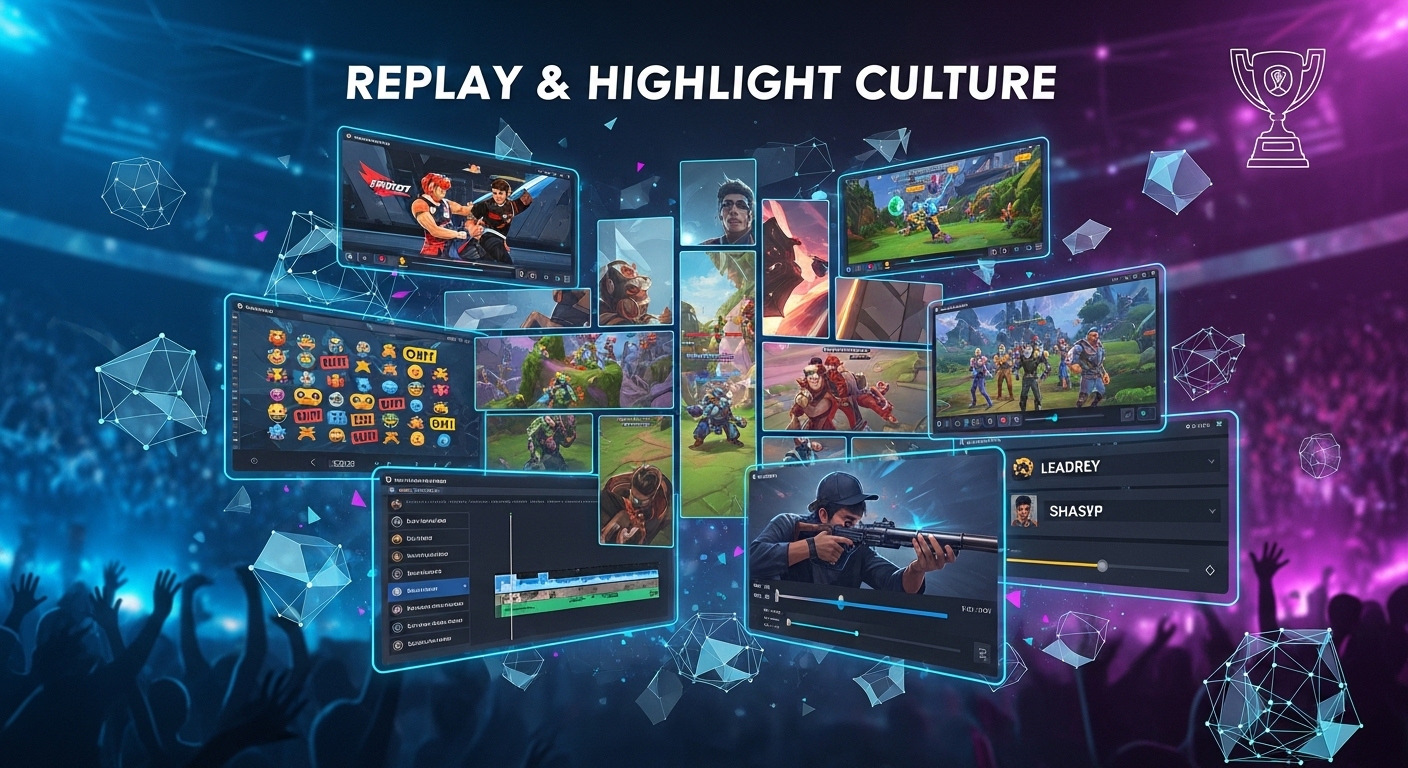
Esports has grown into a global phenomenon over the past two decades, with millions of fans tuning in to watch professional players compete across multiple titles like League of Legends, Dota 2, Counter-Strike 2, Valorant, and Fortnite. With this surge in popularity, one aspect of esports content consumption has become inseparable from the competitive scene itself: replays and highlights.
What was once considered “extra content” has evolved into a culture of its own—driving fan engagement, enabling analysis, immortalizing legendary moments, and shaping how audiences interact with games long after matches conclude. The replay and highlight culture in esports reflects a fusion of technology, storytelling, and fandom that continues to redefine what it means to watch competitive gaming.
In this blog post, we’ll explore the rise, importance, and future of replay and highlight culture in esports, breaking down its impact on players, teams, fans, and the industry at large.
1. The Origins of Replay & Highlight Culture in Esports
From LAN Parties to Broadcast-Ready Moments
In the early days of competitive gaming, particularly in the late 1990s and early 2000s, esports did not enjoy the polished production values we see today. Matches were often recorded by local observers or players themselves. For example, StarCraft: Brood War had a thriving replay scene in South Korea, where fans would download replays from websites and watch them in the in-game engine. This grassroots culture allowed fans to relive key matches, even without access to live broadcasts.
As esports moved from small LAN parties into mainstream arenas, replays became more than just records—they became tools for entertainment, education, and legacy-building. Iconic plays like “The Daigo Parry” in Street Fighter III (2004) gained fame not just because they happened live, but because they were shared, replayed, and discussed endlessly across the internet.
The Rise of Video Platforms
The emergence of YouTube (2005) and later Twitch (2011) accelerated replay culture dramatically. Instead of downloading replay files, fans could instantly watch highlight reels, montages, and “Top 10 Plays of the Week” videos. This accessibility turned esports into a content ecosystem far larger than just live events. By the mid-2010s, esports highlights had millions of views, rivaling mainstream sports highlight shows like ESPN’s SportsCenter.
2. Why Highlights Matter More Than Full Matches
The Attention Economy
A single Dota 2 or CS:GO match can last 40–60 minutes, while tournaments often stretch for hours. Casual fans may not have time to sit through every map, but highlights condense the most exciting parts—clutch plays, comebacks, and dramatic finishes—into digestible 5–10 minute videos. In the attention economy, highlights are the gateway drug to esports fandom.
Emotional Storytelling
Highlights distill raw emotions—joy, despair, shock—into a cinematic experience. Think of Faker’s legendary Zed outplay against Ryu in 2013 (League of Legends Worlds). The full game is long forgotten by many, but the highlight reel of that single moment remains iconic, shared millions of times across YouTube and Twitter.
Cultural Virality
Highlights travel beyond esports communities. Clips like Bugha’s winning moment at the Fortnite World Cup 2019 or ZywOo’s insane 1v4 clutches in CS:GO don’t just stay within gaming circles—they go viral, appearing on mainstream sports channels, TikTok feeds, and even late-night talk shows.
3. The Replay as an Educational Tool
Highlights are about entertainment, but replays—especially full-game replays within game clients—serve a different yet equally important role: education.
For Players
- Strategy Development: Pros and amateurs alike study replays to analyze positioning, rotations, and decision-making.
- Self-Improvement: Reviewing one’s own gameplay highlights mistakes invisible in the heat of the moment.
- Learning from the Best: Games like League of Legends, Dota 2, and StarCraft II allow downloading pro match replays, letting aspiring players study builds, timings, and mechanics directly.
For Coaches & Analysts
Replay systems are vital for professional teams’ backrooms. Coaches dissect every move of their opponents, much like NFL coaches watch game tape. Analysts cut together highlight reels not for entertainment, but for tactical briefings—showing players recurring patterns, mistakes, or exploitable habits.
4. The Evolution of Highlight Content
Montages & Frag Movies
Early highlight culture was dominated by “frag movies”—player-made compilations of headshots, kills, and stylish plays set to music. In Counter-Strike 1.6 and CS:GO, frag movies became legendary, showcasing not just skill but also community creativity. These videos were cultural artifacts that often outlived the relevance of the actual tournament.
Official Highlight Packages
Today, tournament organizers like Riot Games, ESL, and Valve curate professional highlight packages. These are highly produced, with commentary, cinematic cuts, and branded storytelling—turning esports into a sports broadcast rivaling the NBA or FIFA.
User-Generated Clips
The rise of Twitch clips and TikTok shorts has democratized highlight creation. Now, a random viewer can clip an insane play and share it within seconds. Many pro players have grown their brands through viral clips captured by fans.
5. Highlights as a Driver of Esports Marketing
Building Star Power
Highlights immortalize individuals. One clutch play can make a player world-famous overnight. Think of TenZ in Valorant—while his skill was evident, highlight clips circulating on social media catapulted him into superstardom.
Sponsorship Value
Sponsors know that highlights get replayed millions of times, often with logos and branding embedded. A 10-second play that goes viral might deliver more brand exposure than hours of live airtime.
Expanding Reach
Highlights are bite-sized marketing assets. They attract casual gamers and non-gamers alike, drawing them into the esports ecosystem. Without highlights, esports would struggle to capture mainstream attention.
6. Replay & Highlight Platforms
In-Game Replay Systems
- League of Legends: Offers full match replays, slow motion, and camera controls.
- Dota 2: Features extensive replay tools with fog-of-war viewing and advanced stats.
- CS:GO/CS2: Demo files allow frame-by-frame analysis, crucial for pros and casters.
These systems are not just for fans—they’re also part of anti-cheat systems, referee reviews, and tournament integrity checks.
Streaming Platforms
Twitch, YouTube, and now TikTok are central to highlight distribution. Twitch’s clip feature in particular has transformed the culture—moments are captured instantly by fans, not just broadcasters.
Esports Media Outlets
Websites and YouTube channels dedicated to highlights (e.g., Thooorin’s analysis, ESL’s Top 10 plays) amplify replay culture, ensuring no great moment goes unnoticed.
7. Iconic Moments Cemented by Replay Culture
Replay and highlight culture has immortalized some of esports’ greatest moments:
- The Daigo Parry (2004) – A fighting game legend was born.
- Faker’s Zed Outplay (2013) – Cemented Faker’s “Unkillable Demon King” reputation.
- OG’s Back-to-Back TI Wins (2018–2019) – Highlight reels captured their emotional journey.
- s1mple’s Falling AWP Shot (CS:GO, 2016) – Instantly became one of CS’s most replayed clips.
- Bugha’s Fortnite World Cup Victory (2019) – A cultural moment shared globally.
These plays aren’t remembered just because they happened—they’re remembered because they were replayed, clipped, and shared endlessly.
8. The Social Media Amplification of Highlights
In the 2020s, social media is the highlight engine.
- Twitter/X: Real-time clipping and viral sharing during events.
- TikTok: Short-form edits with music and memes make highlights reach Gen Z audiences who may never watch a full match.
- Instagram & Shorts: Bite-sized content ideal for casual fans.
This has blurred the line between esports and traditional influencer culture. A pro player can become as much a content creator as a competitor, with highlights feeding both their career paths.
9. Replay & Highlight Culture vs. Traditional Sports
The comparison with sports is inevitable. In many ways, esports mirrors and extends sports highlight culture:
- ESPN Top Plays vs. Esports Montages
- Game Tape Review in NFL vs. Replay Systems in Esports
- Social Media Virality in Both Arenas
But esports has unique advantages: every moment is digitally captured, editable, and shareable. Unlike traditional sports, there’s no need for camera operators to “catch the moment”—it’s all recorded natively in-game.
10. The Dark Side of Replay Culture
While largely positive, highlight culture has downsides:
- Overshadowing Context: Highlights can misrepresent matches by ignoring strategic depth.
- Pressure on Players: Pro players know every mistake can become a viral lowlight.
- Toxicity: Clips of player misplays often fuel harassment.
- Monetization Issues: Players and teams often don’t control highlight distribution, raising questions about rights and revenue.
11. The Future of Replay & Highlight Culture
AI & Automated Highlights
Artificial intelligence is being used to auto-generate highlight reels based on in-game triggers (kills, objectives, crowd reactions). This will make highlight production faster and more scalable.
Interactive Highlights
Imagine being able to jump into a highlight clip and watch it from any player’s perspective. Some platforms are experimenting with this level of interactivity.
AR/VR Integration
In the future, highlights could be experienced in virtual reality—fans could stand inside the arena as a famous play unfolds.
Personalized Highlights
Fans may soon receive tailored highlight reels—showing only their favorite player, team, or role across a tournament.
12. Why Replay & Highlight Culture Will Continue to Define Esports
Replay and highlight culture is more than a side effect of esports—it is the heartbeat of how fans engage with the scene. In a world where digital entertainment is abundant, highlights ensure esports moments are never forgotten, always replayable, and eternally shareable.
From the Daigo Parry to Faker’s Zed outplay, from Bugha’s Fortnite championship to ZywOo’s clutches, these moments remind us that esports is not just about who wins or loses—it’s about the unforgettable plays that capture our imagination.
Replay and highlight culture ensures that the best of esports is preserved, celebrated, and amplified for generations to come.
Final Thoughts
As esports grows into a multibillion-dollar global industry, replays and highlights will remain one of its most powerful cultural forces. They provide entertainment, education, marketing, and legacy all in one package. Whether you’re a die-hard fan watching every tournament, a casual viewer catching clips on TikTok, or a player studying replays to improve, you’re part of this replay-driven culture.
In the end, highlights are not just about games—they’re about moments that define competitive history. And in esports, history is being made one replay at a time.
About the Author