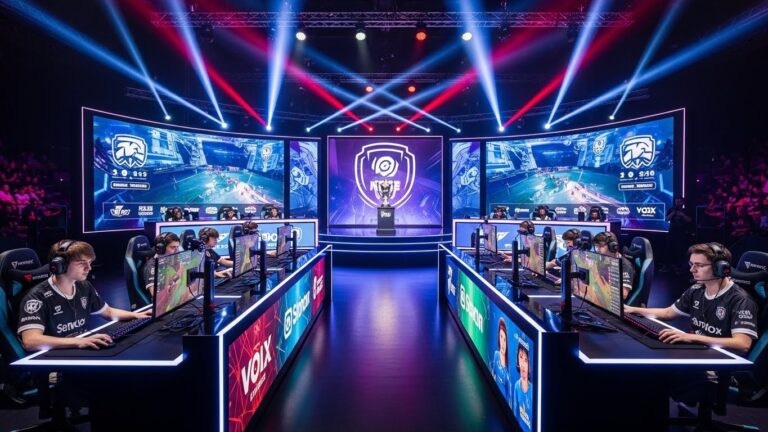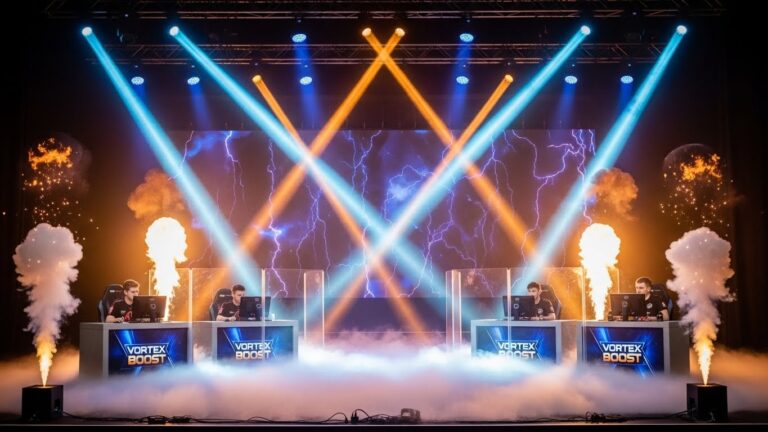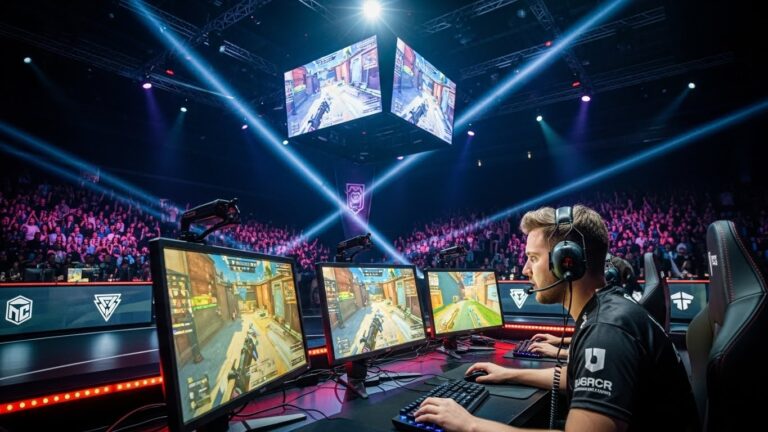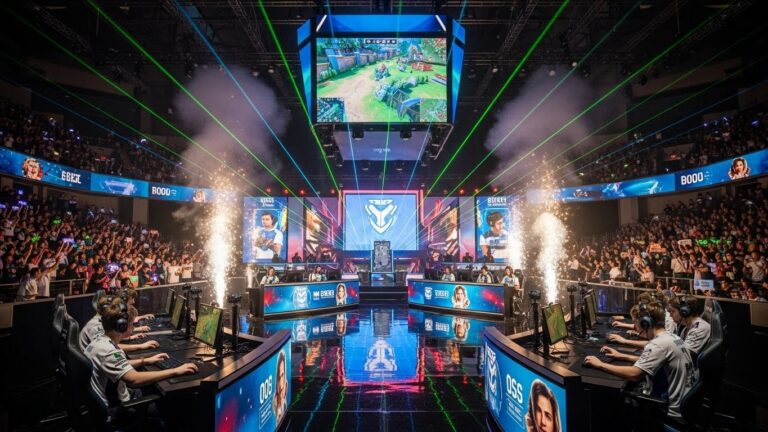
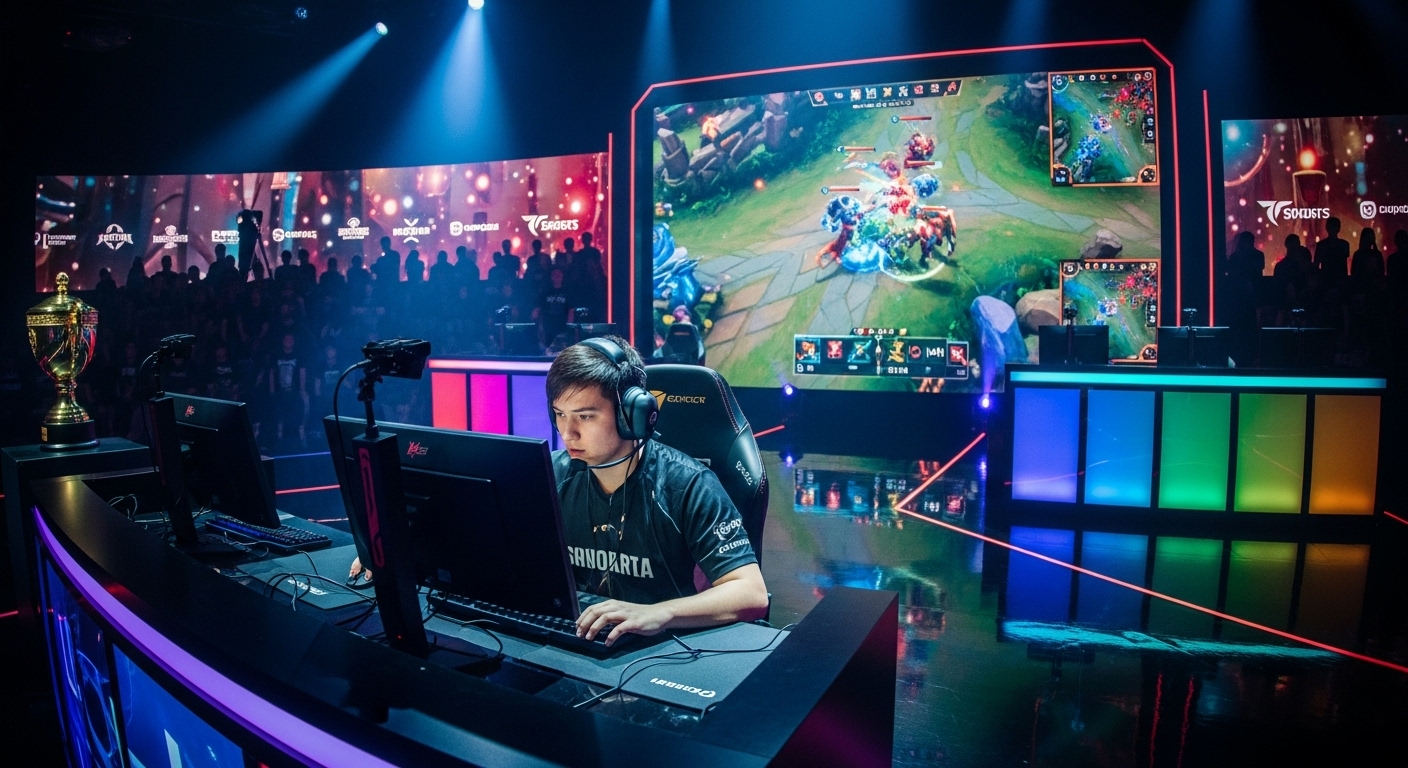
Esports, the competitive side of video gaming, has rapidly evolved from a niche interest into one of the most popular forms of entertainment in the world. Once seen as a pastime for dedicated gamers, esports has exploded into a multi-billion-dollar industry with millions of fans, professional players, and massive prize pools. It has transcended the boundaries of traditional gaming and carved out its own space within the broader entertainment ecosystem. In this blog post, we will explore the growth of esports, its impact on both the gaming world and beyond, and its future trajectory.
What Exactly Is Esports?
At its core, esports refers to organized, multiplayer video game competitions where professional players or teams compete against one another in various gaming titles. These games range from first-person shooters like Call of Duty and Counter-Strike to real-time strategy games such as StarCraft and League of Legends. Esports can involve individual players or large teams, and the competition is often held in tournaments or leagues that are broadcasted for a global audience.
Esports is more than just playing video games; it is a fully-fledged competitive sport with high stakes, professional organizations, sponsorships, and a growing global fanbase. Much like traditional sports, esports athletes train rigorously, develop strategies, and work together to secure victories in tournaments. With live streaming platforms like Twitch and YouTube Gaming, esports has become accessible to a vast audience, enabling fans to watch tournaments and support their favorite players and teams in real-time.
The Origins of Esports: A Journey from Arcade to Global Arena
The history of esports can be traced back to the early days of video gaming, where arcade games and local competitions served as the foundation for the competitive gaming culture. One of the earliest examples of competitive gaming was the Space Invaders Championship held in 1980. The competition drew attention to the potential of gaming as a form of organized competition, even though it was still very much a fringe hobby at the time.
In the 1990s, the rise of the internet allowed for the first truly global competitive gaming experiences. Online multiplayer games such as Quake and Warcraft opened the door for international tournaments, and the Cyberathlete Professional League (CPL), founded in 1997, was one of the first major organizations to hold large-scale esports tournaments. Throughout the early 2000s, esports began to grow significantly, with more and more tournaments being held in both digital and physical venues.
In 2000, the World Cyber Games (WCG) was launched, drawing players from around the world to compete in a variety of games. This was a pivotal moment in the development of esports, as it introduced the idea of a world championship for video games. Following this, other organizations such as the Electronic Sports World Cup (ESWC) and DreamHack began to establish esports as a serious competitive scene.
The Rise of Esports as an Industry
By the 2010s, esports had begun to transcend its roots as a niche subculture and emerged as a legitimate industry. Streaming platforms like Twitch and YouTube Gaming revolutionized how fans could watch esports events. Rather than relying on television broadcasts, which often limited access, these platforms made it possible for fans to tune into tournaments and follow their favorite players from anywhere in the world. Twitch alone has amassed millions of active users who tune in to watch gaming content, with a significant portion of that viewership dedicated to esports.
With the growth of esports came increased revenue streams. Sponsorships, media rights, and advertising deals began to flood the industry. Companies like Intel, Coca-Cola, Red Bull, and Monster Energy entered the esports space, creating lucrative partnerships with teams, tournaments, and players. The prize pools for major tournaments, such as The International for Dota 2, reached staggering heights, with millions of dollars on the line. For instance, The International 2021 offered a prize pool of over $40 million, a record for any esports tournament.
Moreover, esports organizations began to professionalize. Teams such as Team Liquid, Cloud9, and T1 have become household names, with dedicated fanbases that rival those of traditional sports teams. These organizations signed players to contracts, hired coaches, analysts, and even psychologists to ensure optimal team performance. Esports was no longer just about playing games—it had become a highly structured, highly professional industry.
Esports and Its Cultural Impact
One of the most remarkable aspects of esports is its cultural impact. The rise of esports has reshaped how we view gaming as a form of entertainment. What was once seen as a solitary, niche hobby is now recognized as a spectator sport with a massive following. Esports has managed to capture the attention of a younger demographic, particularly Millennials and Gen Z, who see gaming as an integral part of their culture.
This cultural shift is evident in the way esports is integrated into mainstream media. Major sports networks like ESPN have started broadcasting esports tournaments, showcasing games like League of Legends and Counter-Strike: Global Offensive to a broader audience. Esports stars have gained celebrity status, with players like Faker, Ninja, and S1mple becoming well-known outside of the gaming world. Esports tournaments are now held in massive arenas, often filling thousands of seats with enthusiastic fans, and the spectacle is broadcast live to millions of viewers around the world.
Social media also plays a key role in the cultural impact of esports. Platforms like Twitter, Instagram, and TikTok allow fans to interact with players and teams directly, further blurring the line between players and their audience. Esports has become an immersive experience, where fans are not just passive viewers but active participants in the digital ecosystem.
Esports and Traditional Sports: A New Era of Convergence
The relationship between esports and traditional sports has been evolving steadily over the past decade. While esports has its roots in gaming, it has drawn increasingly closer to the traditional sports industry, with professional leagues and organizations seeking to bridge the gap between the two. Many traditional sports teams have invested in esports, either by creating their own teams or sponsoring existing ones.
Football clubs such as Paris Saint-Germain and Manchester City have ventured into the world of esports by establishing competitive teams in games like FIFA and League of Legends. Similarly, major basketball teams like the Cleveland Cavaliers and the Golden State Warriors have launched esports initiatives, recognizing the growing popularity of competitive gaming among their fanbases. Esports has also been embraced by sponsors traditionally associated with traditional sports, such as Nike, Adidas, and Audi.
This convergence between esports and traditional sports is not limited to investments and sponsorships. The increasing presence of esports in major sports events is also noteworthy. In 2018, esports was featured as a demonstration event at the Asian Games, and there are discussions about including esports in the Olympics in the near future. This growing integration of esports with mainstream sports suggests a future where the two forms of competition coexist and thrive side by side.
The Growing Popularity of Esports as a Career Path
With the rise of esports, many players now see it as a legitimate career option. Professional esports athletes can earn money through tournament winnings, sponsorship deals, streaming, and even content creation on platforms like YouTube. In fact, some top-tier players in games like Dota 2, League of Legends, and Fortnite have made millions of dollars from their esports careers.
As a result, many young gamers are training to become professional esports athletes, with a clear path to success through intense practice, strategy development, and participation in local, national, and international tournaments. Esports has also paved the way for other career opportunities within the industry, such as coaching, event management, broadcasting, journalism, and marketing.
In addition, esports is starting to gain academic recognition. A growing number of universities and colleges are offering scholarships for competitive gaming, and some institutions have even established dedicated esports programs. High school esports leagues are also on the rise, further encouraging the next generation to pursue careers in gaming.
The Future of Esports: What Lies Ahead?
Looking to the future, the growth of esports shows no signs of slowing down. As technology advances, we can expect even more immersive experiences for both players and viewers. The rise of virtual reality (VR) and augmented reality (AR) will likely have a significant impact on the esports landscape, offering new ways to engage with games and tournaments. The global expansion of 5G networks will also enable faster and more reliable online gaming, potentially opening up new markets and making esports more accessible to players and fans around the world.
Mobile gaming is another area where esports is likely to see significant growth. Games like PUBG Mobile and Mobile Legends have already established a massive following, particularly in regions like Southeast Asia, India, and China. As mobile devices continue to improve in terms of performance, mobile esports will become an even more important sector of the industry.
In conclusion, esports has come a long way from its humble beginnings. What was once a subculture has grown into a global industry, with millions of fans, professional players, and significant financial investments. As the industry continues to grow, esports will continue to shape the future of entertainment, technology, and sports culture in ways we are only beginning to understand. The rise of esports signals the dawn of a new era in competitive gaming, and the future looks brighter than ever for this digital sports revolution.
About the Author