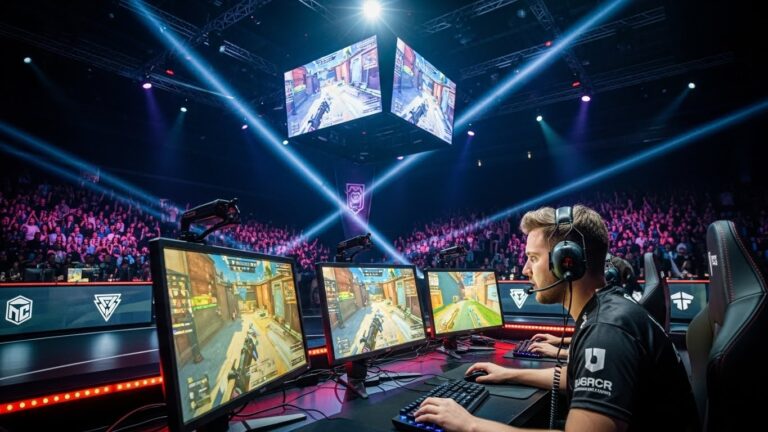

Confidence is one of the most defining traits of elite competitors in any field, and esports is no exception. In a world where milliseconds can determine victory or defeat, confidence doesn’t just influence how a player feels—it shapes how they think, react, and perform. Whether it’s clutching a decisive round in Counter-Strike 2, taking the last team fight in League of Legends, or executing a perfect combo in Tekken, confidence is what separates a good player from a great one.
This blog explores how confidence impacts esports athletes, how it’s built and maintained, and what happens when it falters.
Understanding Confidence in Esports
In competitive gaming, confidence is the belief that one’s preparation, knowledge, and skill will lead to success. It’s not arrogance or overestimation—it’s trust in one’s ability to perform under pressure. When players trust themselves, their decision-making becomes instinctive, reactions sharpen, and communication improves.
Confidence allows players to make bold plays, adapt to unpredictable situations, and recover from mistakes without losing composure. In contrast, self-doubt can make even the most skilled player hesitate, second-guess calls, and miss crucial opportunities.
Why Confidence Is Essential for Competitive Success
Confidence in esports affects several layers of gameplay and mindset. It’s not only psychological—it has measurable effects on performance.
1. Better Decision-Making
Confident players make faster, clearer decisions because they rely on practiced intuition. In fast-paced games like Valorant or Apex Legends, this is crucial. A confident shot-caller won’t hesitate when calling for an aggressive push or a retake. Hesitation, even by a second, can cost the round.
2. Increased Resilience
Losses are inevitable in esports. What separates champions from average players is how they bounce back. Confidence helps players reframe setbacks as learning opportunities instead of failures. A player who believes in their long-term ability to improve won’t spiral after a tough loss.
3. Enhanced Team Communication
In team-based esports, confidence doesn’t just exist within individuals—it spreads across the roster. A confident leader builds trust within the team. When players believe in each other’s abilities, coordination improves, and strategies become more cohesive.
4. Reduced Performance Anxiety
Esports athletes often perform in front of millions of viewers, both online and live at events. Confidence helps mitigate the stress of performing on stage. When players focus on execution rather than fear of failure, their mechanics and focus stay consistent.
How Confidence Is Built in Esports
Confidence isn’t something players are born with—it’s developed through deliberate practice, positive reinforcement, and mental conditioning.
1. Preparation and Repetition
Confidence grows through mastery. When players invest countless hours into scrims, aim training, and strategy reviews, they develop muscle memory and trust in their abilities. Preparation gives them a safety net: even under pressure, their practiced responses kick in automatically.
2. Coaching and Mentorship
Many professional teams now employ sports psychologists and confidence coaches. These experts teach players visualization, goal-setting, and emotional regulation. Coaches also play a crucial role by reinforcing trust—helping players recognize their strengths and avoid overanalyzing mistakes.
3. Positive Team Culture
A healthy team environment fosters confidence. When teammates encourage rather than criticize, individuals feel supported enough to take risks and experiment. Toxicity, on the other hand, erodes trust and self-belief.
4. Consistent Performance Tracking
Many teams rely on performance analytics to provide objective feedback. When players see measurable progress in stats—such as kill/death ratios, map control, or reaction time—they gain proof of improvement, which boosts confidence naturally.
Confidence vs. Overconfidence
Confidence is powerful—but too much of it can be dangerous. Overconfidence can lead to reckless plays, ignoring feedback, or underestimating opponents.
The line between confidence and arrogance is subtle. Confident players take calculated risks because they believe in their skills and respect their opponents. Overconfident players take unnecessary risks, often resulting in costly mistakes.
The best competitors find balance: they enter each match believing they can win, but never assuming victory is guaranteed.
Case Studies: Confidence in Action
1. Faker – The Embodiment of Controlled Confidence
Lee “Faker” Sang-hyeok, the legendary League of Legends player, is known for his calm and composed demeanor. His confidence is rooted in relentless preparation. Even when trailing in games, Faker never panics. His composure has led to some of the most iconic comebacks in esports history, proving that confidence doesn’t mean showing emotion—it means trusting your instincts.
2. s1mple – Turning Self-Belief into Dominance
Oleksandr “s1mple” Kostyliev from Counter-Strike 2 represents confidence refined through hardship. Early in his career, s1mple’s frustration often affected his gameplay. Over time, he channeled that energy into self-assurance and leadership. His belief in his mechanical ability and tactical vision makes him one of the most feared players in the scene.
3. TenZ – Confidence in Adaptation
Tyson “TenZ” Ngo from Valorant showcases how confidence enables adaptation. Known for his flexible playstyle, TenZ trusts his instincts to experiment with angles, agents, and strategies mid-match. His confidence gives him freedom to innovate without fear of failure.
How Confidence Impacts In-Game Mechanics
Confidence directly influences reaction time, aim consistency, and in-game communication. Studies in cognitive psychology show that confident performers maintain optimal arousal levels, keeping focus sharp without tipping into anxiety.
In esports, this translates to:
- Smoother Aim: Confident players don’t overthink crosshair placement—they act instinctively.
- Stable Reactions: Confidence minimizes hesitation during high-pressure moments.
- Clear Communication: Confident teams maintain clarity and composure, even when the match gets tense.
This balance of control and assertiveness defines the difference between clutch and collapse.
Recovering Confidence After Failure
Even top-tier players experience slumps. Losing streaks, criticism, or roster changes can shake confidence. Recovery requires mental resilience and structured rebuilding.
- Revisiting Fundamentals: Players often return to basics—solo practice, aim training, or reviewing gameplay to rebuild trust in mechanics.
- Mindset Reset: Confidence can be restored through mindfulness and meditation. Many pros use breathing exercises before matches to clear negative thoughts.
- Small Wins Matter: Celebrating incremental improvements—like better positioning or improved reaction time—helps reestablish self-belief.
- Support Systems: Coaches, teammates, and fans play a crucial role in helping players rebuild morale after tough losses.
The Psychological Science Behind Confidence
Confidence is closely tied to the “self-efficacy” theory in psychology—the belief that one’s actions can achieve desired outcomes. In esports, high self-efficacy leads to persistence, better stress management, and improved goal-setting.
Neurologically, confidence reduces cognitive load by minimizing self-doubt. This frees up mental resources for focus and precision. When players are confident, their brains operate more efficiently, allowing them to perform complex actions under time pressure.
How Teams Foster Collective Confidence
In team esports, confidence must be shared. A confident team operates with unity, trust, and consistency. Coaches cultivate collective confidence through:
- Clear Roles: Each player knows their strengths and responsibilities.
- Structured Feedback: Constructive feedback builds improvement without damaging morale.
- Shared Goals: Unified objectives create accountability and motivation.
- Pre-Match Rituals: Many teams use warm-up routines or motivational talks to enter a confident mindset before competition.
Collective confidence often becomes a team’s most valuable weapon. It can intimidate opponents and create a psychological edge before the first round even starts.
Confidence in the Era of Online Competition
The rise of online tournaments has tested players’ confidence in new ways. Without a live audience or immediate feedback, maintaining motivation can be harder. At the same time, online play introduces technical variables—lag, environment, distractions—that challenge mental stability.
Players who maintain confidence through these conditions demonstrate true psychological strength. The best adapt by creating stable routines and focusing on controllable factors rather than external stressors.
Conclusion: Confidence as the Core of Greatness
In esports, confidence isn’t just a mindset—it’s a weapon. It fuels creativity, sharpens reactions, strengthens teamwork, and turns pressure into performance. Every champion—from Dota 2 to Rocket League—shares one thing in common: unwavering self-belief grounded in preparation.
Confidence can’t be faked; it’s earned through hours of practice, honest reflection, and resilience. For aspiring players, cultivating confidence is just as crucial as mastering aim or strategy.
The next time a player clutches a 1v4 or makes a bold game-winning call, remember—it wasn’t luck or reflexes alone. It was confidence—the invisible power driving every decisive move in competitive gaming.
About the Author