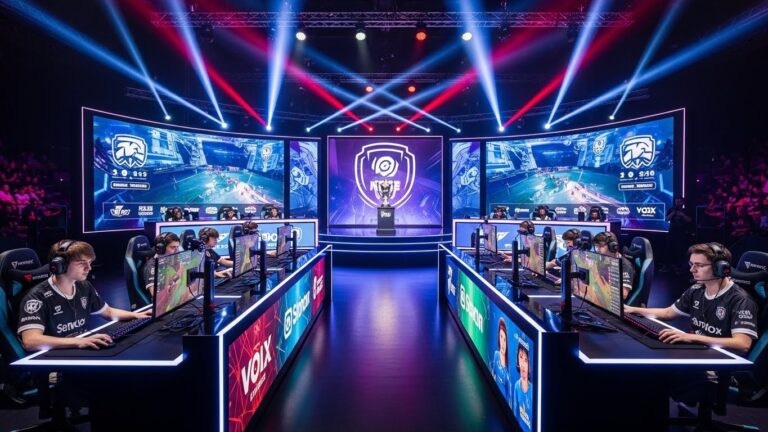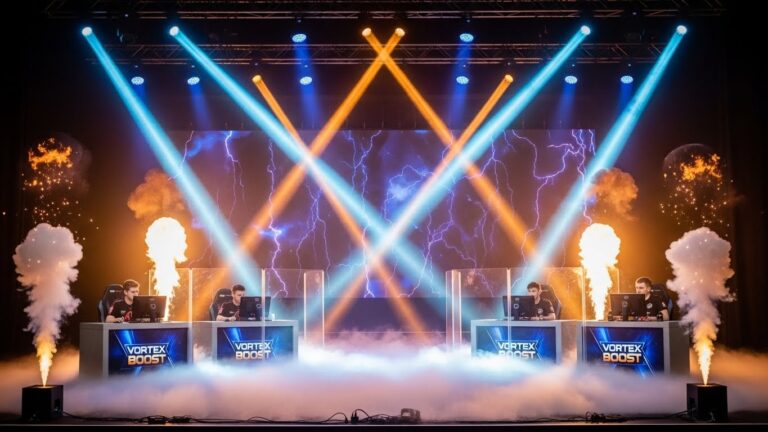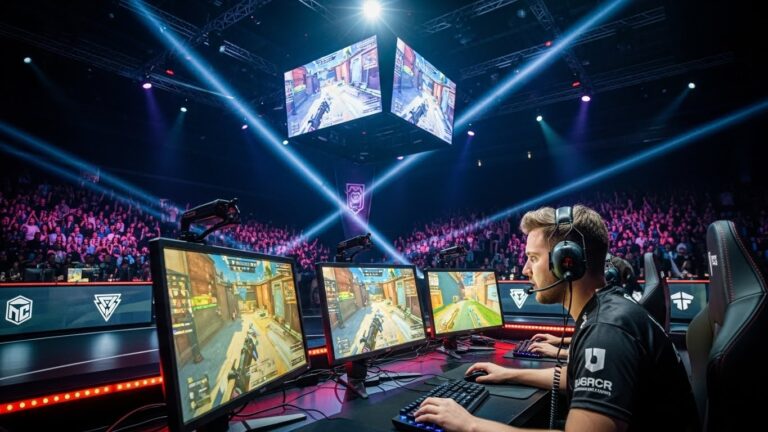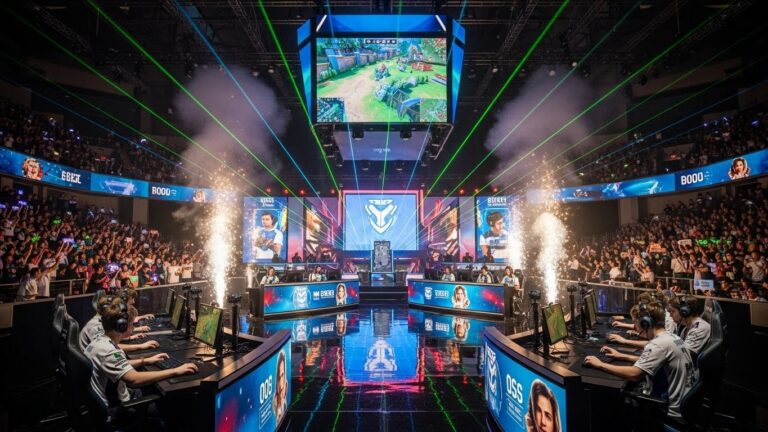
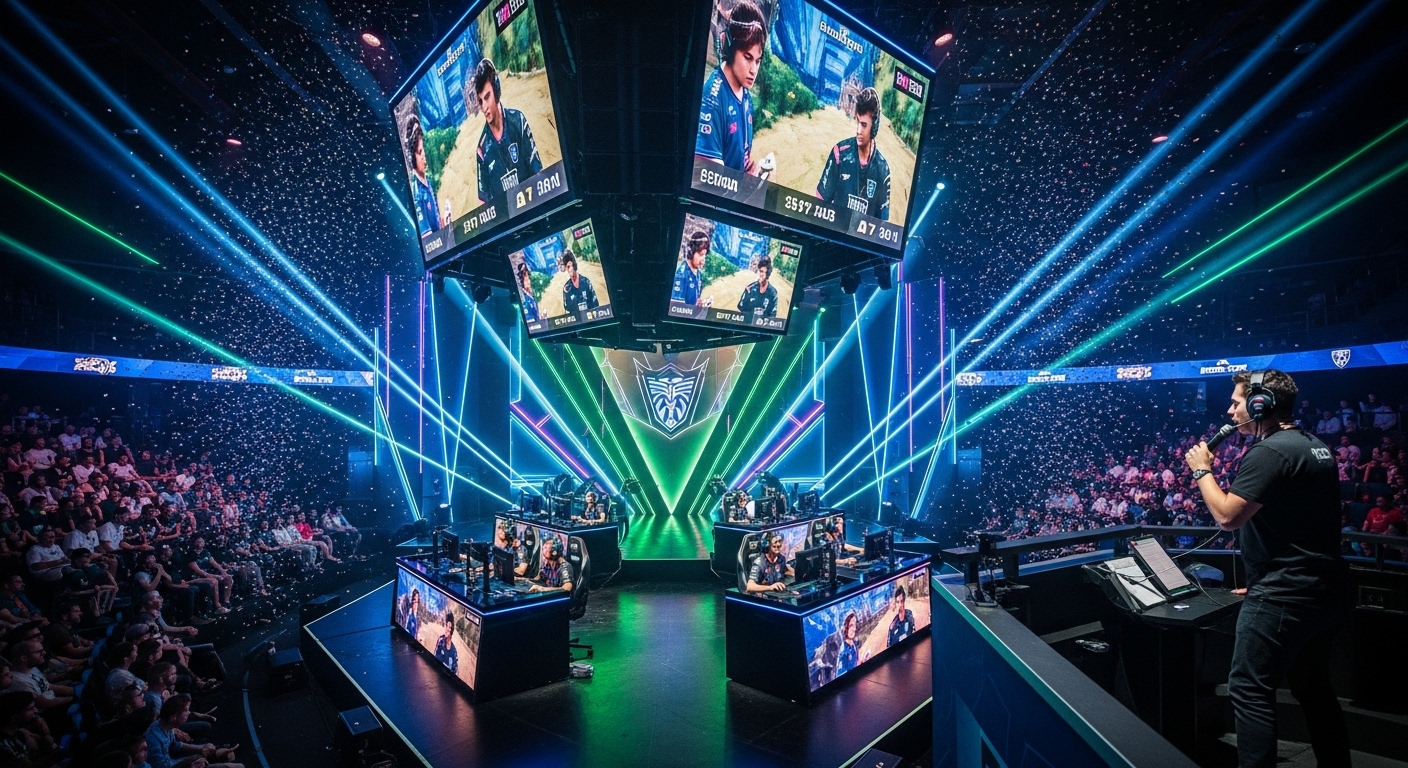
Introduction: Esports — A New Era of Entertainment
Esports has rapidly transformed from a niche hobby to a global entertainment juggernaut. What began as a small community of dedicated gamers has evolved into an industry worth billions of dollars, attracting millions of viewers and players from all corners of the globe. Unlike traditional sports, esports thrives in the digital realm, where players compete in virtual arenas instead of physical fields or courts. This transformation has not only reshaped the entertainment landscape but also created new opportunities for players, teams, broadcasters, and even sponsors.
Today, esports is more than just a competitive pursuit; it’s a cultural phenomenon that’s changing the way we think about gaming, sports, and entertainment. With an expanding viewership, larger-than-life prize pools, and dedicated leagues, esports is no longer seen as a hobby — it’s a career, a lifestyle, and a new form of global competition. In this blog post, we will explore the evolution of esports, its rise to prominence, and what makes it such an appealing form of entertainment to players and fans alike.
The Birth of Esports: From Arcade Games to Global Championships
The story of esports begins in the 1970s and 1980s, during the early days of video gaming. Games like “Space Invaders,” “Pong,” and “Pac-Man” were simple, but they introduced the concept of competition in a digital space. In the beginning, these competitions were small and informal, with players trying to outscore each other in arcades or local tournaments.
The first major event that could be considered an early esports competition was the “Space Invaders Championship” in 1980, where players competed to score the highest points in the game. However, it wasn’t until the late 1990s that esports began to take a more formal shape. Multiplayer games like “Quake” and “Warcraft” provided the first true platform for competitive gaming. These games allowed players to face off against each other in real-time, leading to the creation of the first online multiplayer tournaments.
By the late 1990s and early 2000s, esports began to grow beyond small local tournaments. The development of broadband internet in the early 2000s helped facilitate large-scale online competitions, bringing players from all over the world together. Esports in South Korea became especially prominent with the rise of “StarCraft,” a real-time strategy game that captivated millions. This led to the formation of professional leagues like the “Pro League,” which attracted sponsorships, television coverage, and growing international attention.
The Explosive Growth of Esports: Streaming, Sponsorships, and Global Events
The real tipping point for esports came with the rise of streaming platforms like Twitch and YouTube Gaming. These platforms allowed players to stream their gameplay in real-time, building massive audiences who could watch and interact with their favorite streamers. As more gamers took to platforms like Twitch, esports events began to be broadcast live, reaching millions of viewers across the globe. This democratization of gaming content was instrumental in making esports accessible to a global audience.
The competitive gaming community grew exponentially in the 2010s, with huge tournaments such as “The International” for Dota 2 and the “League of Legends World Championship” attracting millions of viewers. These events featured enormous prize pools and saw teams of elite players from all around the world compete for top honors. “The International,” for example, is known for its massive prize pool, which has reached over $30 million in some years, making it one of the richest esports events in the world.
Alongside these tournaments came the rise of esports organizations and teams. Organizations like Team Liquid, Cloud9, and FaZe Clan became household names, attracting sponsorships from major brands such as Intel, Coca-Cola, and Mercedes-Benz. As these organizations grew in popularity, the industry also began to see a surge in professional esports players, coaches, analysts, and broadcasters.
These professional players dedicated their lives to gaming, training for hours every day and competing in high-stakes tournaments that are watched by millions. It wasn’t just about playing for fun anymore; it was about building a career in a new kind of digital sports ecosystem. As esports grew in importance, mainstream media outlets began to take notice, with esports being covered by networks like ESPN and even included in traditional sports programming.
Esports: A Global Industry with Multiple Revenue Streams
The business of esports has grown far beyond prize money. Today, the esports industry generates billions of dollars annually from various revenue streams. Sponsorships and advertising make up the bulk of the revenue for esports organizations and tournaments. Major global brands see esports as a powerful marketing tool, given its massive and engaged audience, primarily consisting of tech-savvy, younger demographics.
Esports teams and leagues are also profitable in their own right. Top-tier teams often secure sponsorships from tech companies, apparel brands, and even fast-food chains. Additionally, these teams generate revenue through merchandise sales, ticket sales for live events, and exclusive digital content. Esports events are often streamed on platforms like Twitch, which also earn revenue from ads, subscriptions, and donations.
Another lucrative revenue stream for esports is media rights. As the popularity of esports continues to grow, broadcasting deals for major events are becoming more valuable. For example, the Overwatch League, a professional esports league based on the popular game “Overwatch,” secured multi-million-dollar media deals with platforms like Twitch and YouTube. These media rights agreements ensure that esports events are broadcast to millions of viewers globally, whether through traditional TV channels or digital platforms.
Esports has also seen massive investment from venture capital firms and traditional sports franchises. Teams and leagues are attracting millions in funding, leading to an influx of capital that has helped build professional infrastructure for the industry. Traditional sports organizations such as the NBA, NFL, and soccer clubs have also recognized the value of investing in esports. Many major sports organizations now sponsor esports teams, own esports franchises, or have even created their own esports leagues.
The Appeal of Esports: Why Fans Are Watching
So why is esports so appealing to its rapidly growing fan base? There are several factors that contribute to its massive popularity.
First, esports is highly accessible. Unlike traditional sports that require physical prowess and equipment, all you need to compete in esports is a computer or console and an internet connection. This accessibility has made esports especially appealing to younger generations who have grown up with technology and gaming.
Second, esports offers a level of excitement and entertainment that rivals traditional sports. The fast-paced nature of games like “Counter-Strike” or “League of Legends” keeps viewers on the edge of their seats, while the skill and strategy required to succeed at the highest level make the competitions endlessly fascinating. Fans are able to watch incredibly skilled players execute complicated strategies and overcome high-pressure situations, which makes for thrilling entertainment.
Third, esports has fostered a sense of community that draws in players and fans alike. Whether it’s supporting a favorite team, interacting with other viewers in live streams, or following players on social media, esports allows fans to feel connected to the action in real-time. Social media platforms like Twitter, Instagram, and Discord have helped create a vibrant, interactive fan culture that transcends the traditional boundaries of spectator sports.
Finally, esports offers an inclusive environment. Players of all backgrounds, genders, and nationalities are welcome to participate, and the global nature of the sport means that fans from different countries and cultures can come together to celebrate their love of gaming.
The Future of Esports: Opportunities and Challenges
Esports has already achieved significant success, but its future is still full of potential. The industry continues to evolve, with new games, tournaments, and innovations on the horizon. One exciting development is the growing integration of virtual reality (VR) and augmented reality (AR) into gaming experiences. These technologies promise to take esports to new heights, offering even more immersive and interactive ways for fans to experience live competitions.
Additionally, as esports continues to grow in popularity, we can expect to see even greater investments in infrastructure and professionalization. With larger tournaments, bigger prize pools, and more extensive media coverage, esports could one day rival traditional sports in terms of mainstream recognition and viewership.
However, there are challenges ahead. Issues such as player burnout, match-fixing, and the mental health of players are concerns that need to be addressed as the industry grows. It’s also important to ensure that esports remains accessible and inclusive, particularly for women and underrepresented groups.
Conclusion: Esports – A New Form of Global Competition
Esports has firmly established itself as a global powerhouse in the entertainment world. It has evolved from a niche hobby to a thriving, multi-billion-dollar industry with millions of players and fans worldwide. From live tournaments to streaming platforms, esports has created an entirely new ecosystem where digital competition thrives. As the industry continues to grow, esports will likely become an even more integral part of the entertainment landscape, captivating audiences in ways that traditional sports simply can’t.
In the end, esports is more than just gaming. It’s a new form of competition that offers opportunities for players, fans, and brands to connect, innovate, and collaborate. The future of esports is bright, and as it continues to evolve, it will undoubtedly reshape the way we think about entertainment, competition, and global sports culture.
About the Author