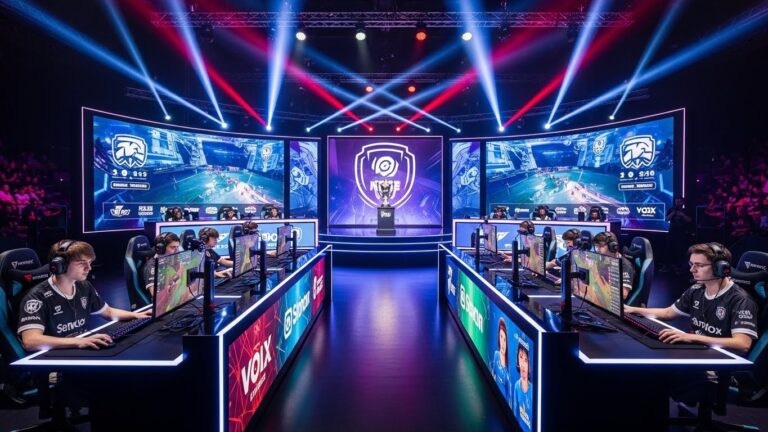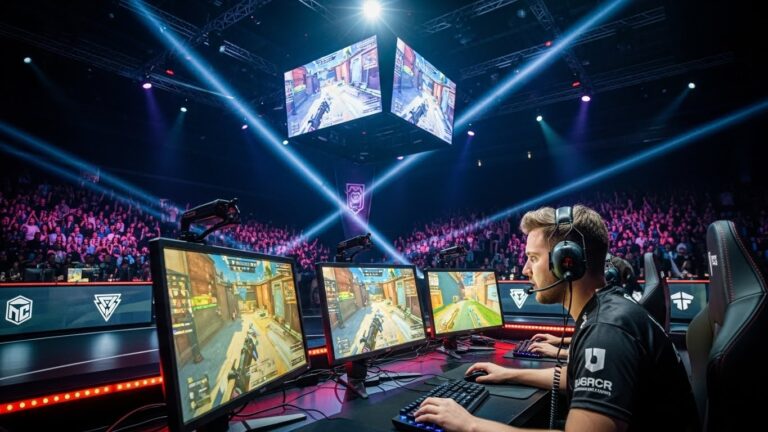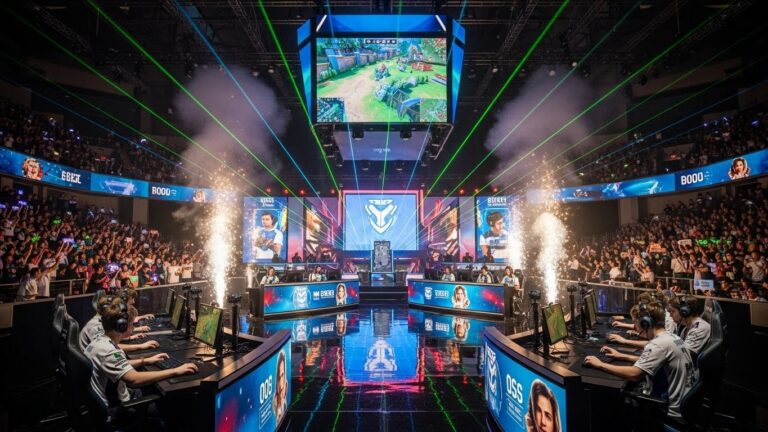
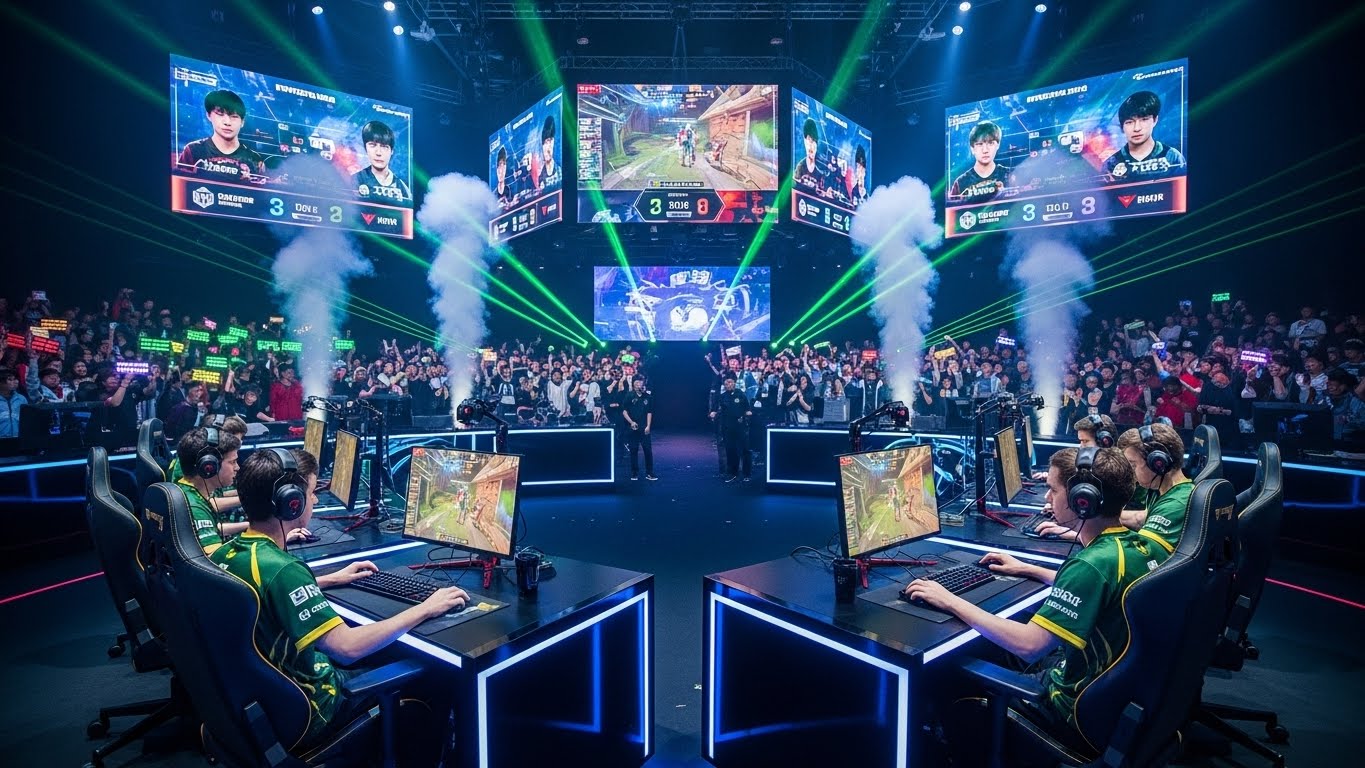
In recent years, esports has become one of the most rapidly growing sectors in the entertainment industry. What was once a niche community centered around video games has blossomed into a global phenomenon. Competitive gaming, known as esports, has evolved from informal online matches to a multi-billion-dollar industry complete with sponsorships, professional players, coaches, and live events broadcasted to millions. This transformation is not just a testament to the power of gaming but also a reflection of the broader digital culture that continues to shape how we consume entertainment, sports, and media. In this blog post, we will explore the meteoric rise of esports, its impact on the entertainment landscape, and its future.
The Origins of Esports: From Arcades to Online Tournaments
The roots of esports stretch back to the early days of video gaming. Competitive gaming existed long before it became a widely recognized sport. In fact, the first recorded esports competition took place in 1972 at Stanford University, where students competed in the Spacewar tournament. Though small and unorganized, this event marked the beginning of a growing community centered around competitive video gaming.
The true spark for modern esports came in the 1990s. As gaming systems evolved and the internet began to expand, more players were able to compete against each other online. Games like Quake, StarCraft, and Warcraft paved the way for the competitive gaming scene, and the creation of professional leagues such as the Cyberathlete Professional League (CPL) in the late 1990s marked the start of formalized esports tournaments. These events, however, were still relatively small, attracting only dedicated players and viewers who were passionate about gaming.
In the early 2000s, esports began to attract a larger audience. The rise of Counter-Strike, Dota, and other competitive titles saw the birth of international tournaments with prize pools and sponsorships. The launch of platforms like Twitch in 2011 transformed esports by allowing viewers to watch live streams of tournaments and gameplay. This opened the floodgates for the wider public to discover esports, which began to grow exponentially from there.
The Golden Age of Esports: Mainstream Recognition and Global Appeal
By the mid-2010s, esports began to enter the mainstream. What was once considered a hobby or fringe activity was now becoming a recognized form of entertainment. Titles such as League of Legends, Dota 2, and Overwatch dominated the esports scene, and the popularity of these games brought millions of fans to live streams and tournament broadcasts.
The 2013 League of Legends World Championship, for instance, shattered records for viewership and set the stage for competitive gaming to become as mainstream as traditional sports. That year’s championship attracted 32 million viewers, more than the Super Bowl, proving that competitive gaming was no longer a niche activity, but rather an event that could rival traditional sports for attention and sponsorship.
Streaming platforms like Twitch played an integral role in esports’ rise. Twitch allowed anyone with an internet connection to watch and interact with live-streamed content, including esports tournaments. It also gave aspiring gamers a platform to broadcast their skills and grow an audience. Streamers like Ninja, Shroud, and Dr Disrespect became household names, transcending their games to become cultural icons. The ability to interact directly with fans during streams also turned esports into an immersive experience where viewers felt like part of the action.
Esports tournaments have grown from small, local events to massive global spectacles. Events such as The International for Dota 2 and the League of Legends World Championship now fill huge arenas, drawing thousands of live spectators and millions of viewers online. The prize pools for these events have reached astonishing figures, with The International 2021 boasting a prize pool of over $40 million. These events are now part of the larger cultural conversation, often covered by mainstream media outlets and receiving attention from major brands and influencers.
The Players: The Heart of Esports
At the core of the esports industry are the players, who dedicate hours upon hours to perfecting their craft. Becoming a professional esports athlete requires more than just skill—it demands discipline, mental toughness, and a willingness to put in the work. Esports players often start their careers at a young age and must train like traditional athletes. Practice sessions, team coordination, strategy discussions, and psychological preparation are all part of a day in the life of a competitive gamer.
The path to success in esports is difficult. Many players begin their careers by competing in smaller, local tournaments or as part of amateur leagues. As their skills improve, they may be noticed by professional teams or organizations. Esports teams, much like traditional sports teams, recruit players based on their skill level, game knowledge, and teamwork ability. Some of the most successful esports players, such as Faker (Lee Sang-hyeok) in League of Legends or The International champions from Dota 2, have become legendary figures in the gaming world.
Professional esports players are also subject to intense scrutiny. Their performances are often analyzed by coaches and analysts, and they are expected to maintain peak performance both in-game and off. Some players even hire mental coaches to help them deal with the pressure of competition. Like traditional athletes, esports players are also at risk of burnout, which can shorten their careers. However, the rewards of success are significant—top players can earn millions in salary, sponsorships, and tournament prizes.
The Industry Behind Esports: Teams, Sponsors, and Investors
Esports is not just about the players; it is a multi-faceted ecosystem that involves teams, organizations, sponsors, broadcasters, and even investors. Esports teams are often backed by major brands, which help to fund operations, organize events, and create content. These organizations manage everything from recruiting players to securing sponsorships and organizing media coverage. As esports has grown, teams have increasingly become professional organizations with their own brands, fanbases, and merchandising.
Sponsorship deals are one of the primary revenue streams in esports. Companies such as Intel, Coca-Cola, and Red Bull are heavily involved in the esports scene, with sponsorships for teams, tournaments, and even individual players. These deals are critical for sustaining the infrastructure of esports, as they help to cover operational costs and boost prize pools for tournaments. As esports continues to grow in popularity, brands from outside the traditional gaming industry are beginning to explore partnerships as well. Sports apparel companies like Nike and Adidas, for example, have begun sponsoring esports teams and producing branded esports gear.
In addition to sponsorships, esports organizations are finding new revenue sources through media rights and streaming. Major events are now broadcast globally on platforms such as Twitch, YouTube, and Facebook, where advertisers pay to reach the audience of millions watching these live streams. With esports now reaching a global audience, broadcast deals and partnerships are a significant driver of growth in the industry.
Investors have also flocked to the esports scene, seeing the massive growth potential. The influx of investment has led to the creation of major esports leagues, such as the Overwatch League, which operates like a traditional sports league, with city-based teams competing for a season championship. These leagues are backed by major investors and offer players salaries, contracts, and benefits akin to professional sports athletes.
Esports and Traditional Sports: A Growing Convergence
As esports continues to mature, it has begun to overlap with traditional sports in unexpected ways. Professional sports teams are increasingly investing in esports by either forming their own teams or partnering with established esports organizations. Major soccer clubs such as FC Barcelona and Manchester City have entered the esports scene, signing players for games like FIFA and Rocket League. American sports leagues, including the NBA, NFL, and MLS, have also created esports leagues centered around their respective sports games.
This convergence between esports and traditional sports has led to exciting cross-industry collaborations. Some esports tournaments are even held in the same stadiums as traditional sports events, with a shared audience and atmosphere. The concept of esports as a form of sports entertainment is becoming more mainstream, with major broadcasters like ESPN and Fox Sports airing live esports tournaments and offering coverage.
In addition, esports athletes are beginning to receive similar recognition as traditional athletes. While there are still stereotypes and misconceptions about esports as a legitimate career, esports stars now enjoy sponsorships, endorsements, and media deals similar to those of professional athletes in traditional sports. This shift is helping esports gain more credibility as a legitimate form of entertainment and competition.
The Future of Esports: The Path Forward
Looking ahead, the future of esports is incredibly promising. The industry is set to continue its expansion, driven by technological advancements, increasing global accessibility, and the growing mainstream appeal of competitive gaming. One of the most exciting developments on the horizon is the integration of virtual reality (VR) and augmented reality (AR) into esports. These technologies could create even more immersive experiences for players and viewers, taking esports to new heights.
In addition, esports is likely to continue its path toward becoming a mainstream form of entertainment. Esports leagues and tournaments may one day rival traditional sports in terms of viewership, sponsorships, and cultural significance. Some even speculate that esports could eventually be included in the Olympic Games, further solidifying its place in the global sporting landscape.
However, there are still challenges that need to be addressed, such as improving the health and well-being of players, preventing cheating and match-fixing, and ensuring the sustainability of the industry. But despite these challenges, one thing is clear: esports is here to stay.
Conclusion
Esports has undergone a remarkable transformation in just a few decades, evolving from small-scale tournaments to a global powerhouse that rivals traditional sports in terms of viewership, sponsorship, and cultural significance. As technology continues to advance and the industry grows, the future of esports looks brighter than ever. Whether you are a player, a fan, or someone looking to invest in the next big thing, it’s clear that esports
About the Author