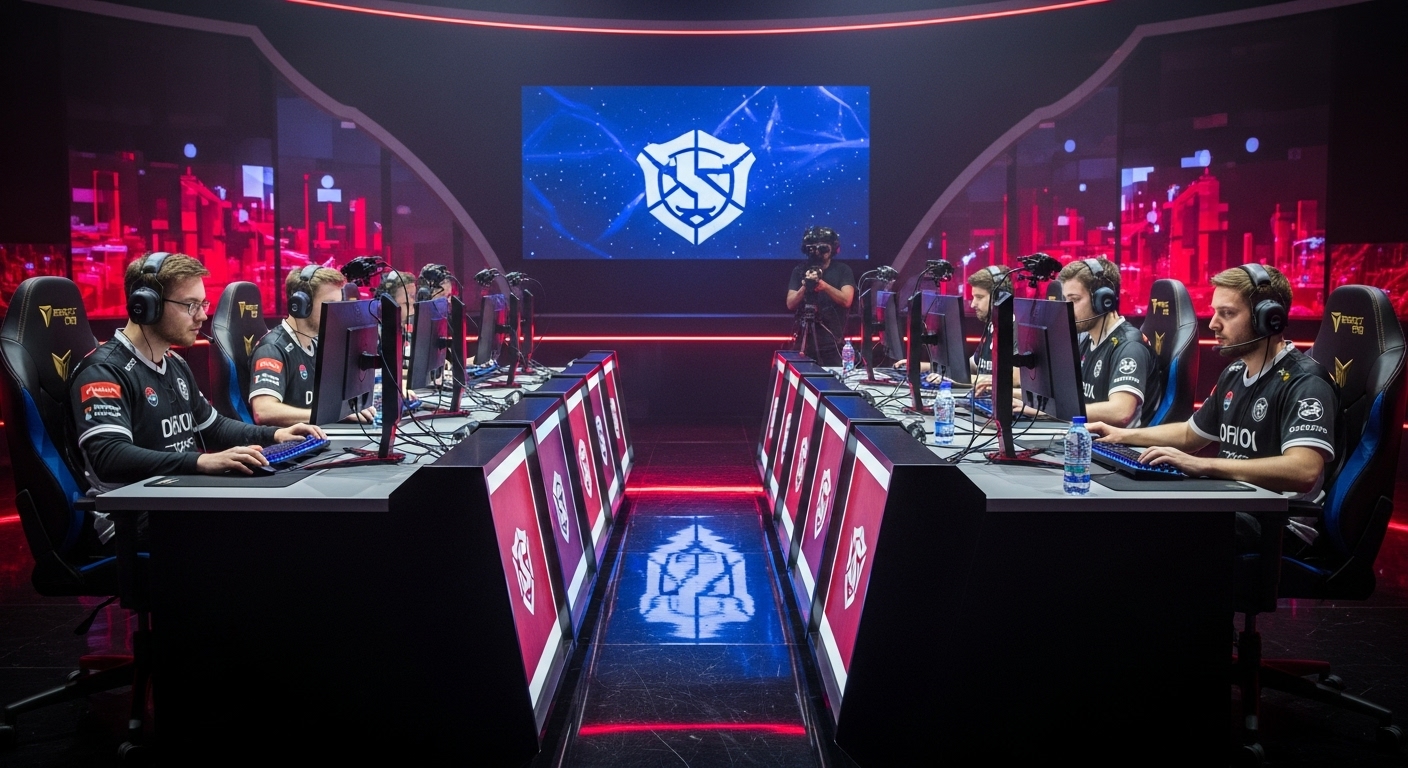
Introduction to a New Kind of Arena
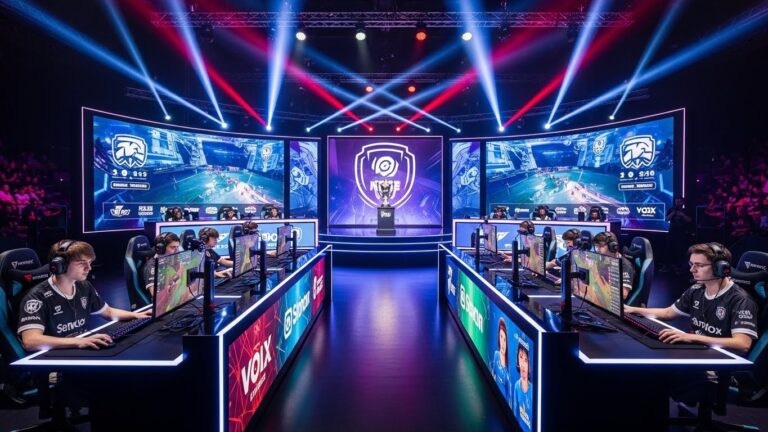
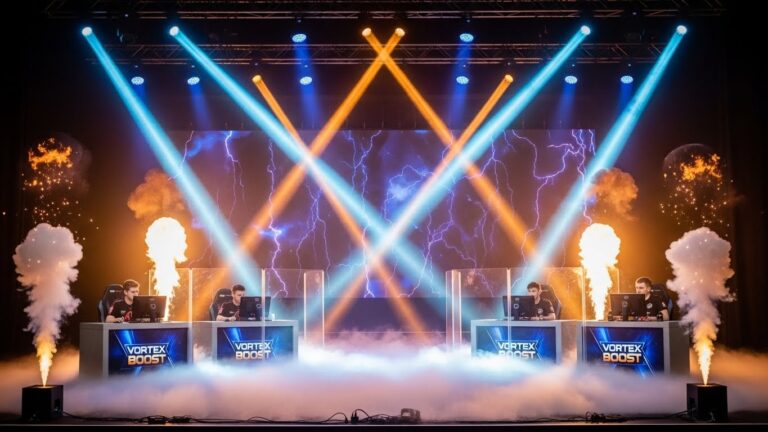
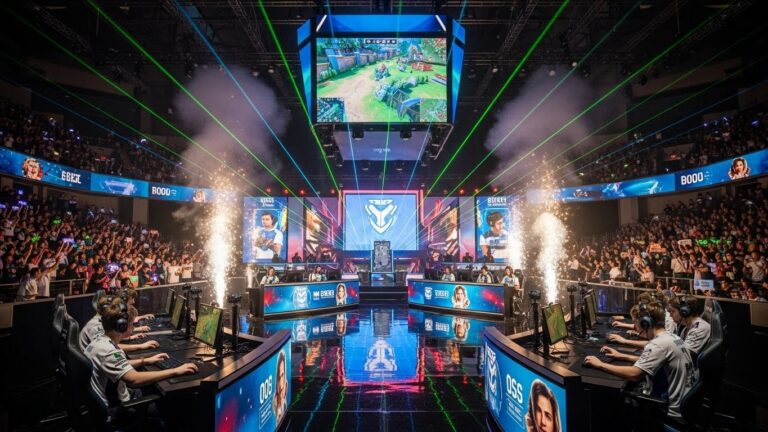
Esports is the grand stadium where pixels become the battleground, headsets replace helmets, and strategy can be more lethal than speed or physical strength. It represents a remarkable transformation in how humanity plays, watches, competes, and even earns a living. From small gatherings of hobbyist gamers to global tournaments filling arenas with roaring crowds, Esports has evolved into a true titan of modern entertainment. Not long ago, playing video games was considered a pastime or perhaps a distraction from traditional responsibilities. Today, it is a billion-dollar industry with celebrities, sponsorships, college scholarships, and fans who cheer like the world depends on their team landing the next game-winning play.
This blog journeys through the story, spectacle, and significance of Esports. With epic stories of triumph and imagination, Esports has reshaped culture itself. Let us explore the digital battlefield where champions are made without ever leaving their chair.
From Pixelated Beginnings to Global Fame
Esports did not appear overnight like some mysterious glitch in the matrix. Its roots stretch back decades, to an era when internet connections sounded like robots learning to sing and computer screens glowed with pixelated galaxies. In 1972, a humble competition for the game Spacewar at Stanford University planted the first seed of gaming rivalry. In the 1980s, arcades buzzed with high-score challenges as players chased leaderboard glory in games like Pac-Man and Donkey Kong. Though modest in reward, the pride of dominating a cabinet screen was priceless.
The 1990s introduced home consoles and the internet, brewing the perfect storm for competitive gaming. Titles such as Street Fighter and StarCraft became battlegrounds of dexterity and mental agility. By the early 2000s, South Korea ignited a revolution, transforming StarCraft professionals into national icons. Teams, sponsorships, fan clubs, and televised matches began to appear. Suddenly, Esports was no longer a footnote in gaming culture. It was a rising phenomenon with global potential.
The Rise of a Spectator Sport
Many wondered why people would watch others play video games. Yet the answer was hiding in plain sight: humans love watching competition. Whether swords clash or keyboards click is just a detail. Esports harnessed the thrill of unpredictable outcomes, superstar personalities, and the beauty of perfect execution under pressure.
What makes it dazzling is its accessibility. Anyone with a game and a dream can attempt to conquer the digital world. And with livestream platforms turning players into entertainers, fans began to form emotional connections. Favorite pro players became role models, showing that skill, practice, and passion could build a career. As fans tuned in by the millions, Esports broadcasts began to rival traditional sports in viewership.
Genres That Rule the Digital Battleground
The variety within Esports is astonishing. Not all competitions involve shooting or fighting. Instead, genres shape unique competitive ecosystems.
Multiplayer Online Battle Arenas
Games like League of Legends and Dota 2 resemble epic wars condensed into fast-paced matches. Teams must master characters with complex abilities, cooperate flawlessly, and make split-second decisions. These games attract enormous fanbases and some of the largest global tournaments in the world.
First-Person Shooters
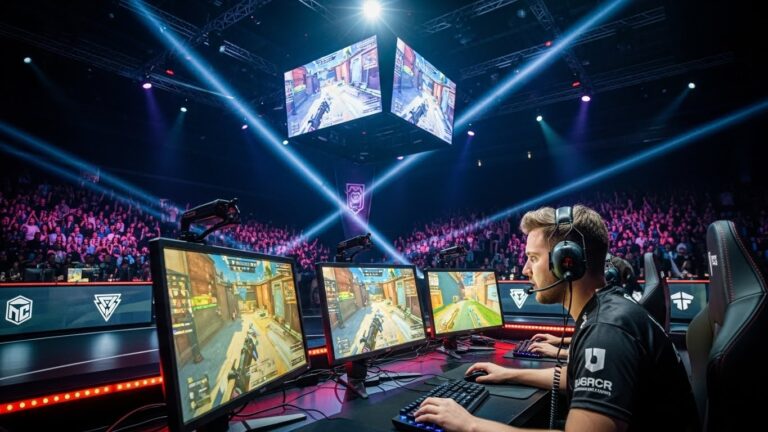
Titles such as Counter-Strike and Call of Duty demand reflexes as sharp as swords and strategies as intricate as chess. Players communicate numbers, positions, and timing in perfect sync, turning tactical knowledge into victory. Audiences feel every heartbeat of action in these high-speed showdowns.
Sports Simulations
Esports meets real sports in games like FIFA and NBA 2K, where digital athletes reenact the drama of physical competitions. These attract traditional sports fans who enjoy seeing their favorite sports evolve in virtual form.
Fighting Games
The legacy genre of the arcade age lives on with games like Tekken and Super Smash Bros. Here, hand-to-hand combat becomes a highly technical dance where a single mistake can lead to downfall.
Each category offers its own thrill. Some require team synergy like a well-conducted orchestra, while others demand solo mastery like a musician playing a flawless solo. Together, they form a diverse kingdom of digital competition.
Esports As a Career Path
There was a time when telling parents you wished to become a professional gamer resulted in raised eyebrows and a suggestion to “go outside for a while.” Today, Esports careers are as legitimate as any entertainment profession.
Players commit to grueling practice schedules lasting upward of eight hours a day. They train reflexes, learn new strategies, and analyze opponents. Teams hire coaches, nutrition experts, and psychologists to ensure peak performance on game day.
The career options extend far beyond playing:
Shoutcasters bring matches to life with electrifying commentary.
Analysts decode the chaos into strategies fans can understand.
Content creators share highlights, guides, and humor with global audiences.
Game developers and event organizers shape the entire ecosystem.
Esports is an industry teeming with opportunities extending far beyond the computer chair.
Colleges and Scholarships The Academic Evolution
Schools once confiscated gaming consoles. Now they hand out scholarships for Esports excellence. Universities around the world have launched official teams, leagues, and facilities equipped with powerful gaming systems. Students can pursue degrees while competing professionally. Esports majors and academic research explore game design, psychology, broadcasting, and business.
This evolution illustrates a remarkable shift in societal attitude. Gaming is no longer a distraction. It is a skill, a talent, and a pathway to education and success.
The Business Behind the Bytes
Esports is powered by an elaborate economic engine. Sponsorships from global brands support teams and tournaments. Merchandising and advertising revenue flow through events watched by millions. Tournament prize pools reach astonishing amounts, creating millionaire champions overnight.
Streaming platforms in particular turned Esports into a media empire. Personalities who share their gameplay grow fanbases larger than some TV stars. Fans donate, subscribe, and cheer digitally with the same enthusiasm found in stadiums. In a world where screens rule, Esports sits at the center of entertainment.
Community and Culture Digital Camaraderie
The culture burning at the heart of Esports is community. Players gather from around the world, forging friendships through shared victories and respectful rivalries. Gaming events resemble carnivals where creativity runs wild. Cosplayers bring characters to life. Fans chant team slogans. Shared laughs and collective gasps ripple through the crowd as the game unfolds.
People find belonging in guilds, clans, and clubs. Esports has created virtual neighborhoods where individuals feel valued for their skill and personality, not their age, nationality, or physical appearance. It’s a welcoming arena where diversity wins.
Challenges on the Road to Glory
No revolution comes without its boss battles. Esports faces real issues that must be defeated to maintain integrity and growth.
Toxic behavior can poison online communities, requiring better education and enforcement.
Players face physical and mental strains from intense practice schedules.
Match-fixing and cheating threaten fairness.
Representation of women and marginalized groups still needs improvement.
But the industry wrestles with these challenges as actively as any difficult mission. As awareness rises, so do the solutions. Coaches teach wellness. Companies take stronger stances against misconduct. Organizations for inclusivity fight for equal respect in every lobby and stage.
The Psychology of Playing to Win
Esports is not solely about reaction time. Mental strength can be the difference between triumph and defeat. Players must remain calm under pressure as thousands watch their every move. Each decision can alter fate in less than a second. Learning to manage nerves, recover from mistakes, and synchronize with teammates demands tremendous emotional resilience.
Competition in Esports is a mind game as much as a mechanical one. The best players balance instinct with preparation, ego with humility, and aggression with strategy.
Technology The Ever-Evolving Playground
Advances in technology pump power into Esports like a continuous upgrade. Better hardware leads to smoother gameplay. Communication tools strengthen teamwork. Virtual reality promises new worlds where esports might soon take place in fully immersive environments. Artificial intelligence helps analyze professional strategies and improve training.
As technology evolves, so does the thrill of Esports. The future may introduce competitions we cannot yet imagine, where physical motion and digital worlds blend in ways that make today’s games look like ancient relics.
Esports and Traditional Sports The Great Comparison
Some question whether Esports should be called a sport. But sport is fundamentally competition requiring skill, effort, and mastery. Esports checks all these boxes with style. While athletes in traditional sports train their muscles to sprint and leap, Esports competitors train their minds and reflexes to plan, strategize, and execute.
Both demand discipline, teamwork, sacrifice, and brilliance. Fans celebrate underdog victories and gasp at game-winning moments in equal awe. The arenas may be made of screens rather than grass, but the thrill of battle remains universal.
Iconic Moments That Defined the Industry
Esports has already produced legendary chapters worthy of history books. Fans remember unbelievable comebacks, shocking upsets, and individual plays so perfect they seem unreal. These moments travel through social networks like wildfire, inspiring awe and pulling curious newcomers into the community.
Stories of players who rose from bedroom dreamers to world champions reinforce a core message: talent can come from anywhere. In this world, limitation is the true enemy, not the opponent.
Esports as a Cultural Force
Esports influences fashion, music, language, and global trends. Pro players appear in commercials. Game characters spark design movements. Stadiums erupt as fans wave glowing banners representing their digital heroes. National pride emerges when teams represent their countries in world championships. Children grow up dreaming not only of scoring a goal or hitting a six but of executing a masterful final push or flawless combo.
Games once regarded as solitary distractions have become shared spectacles connecting millions.
The Future Leveling Up Beyond Imagination
As powerful as Esports is today, it is still leveling up. Improvements to virtual reality and mixed reality may birth entirely new arenas where players feel the wind as they soar, dodge, and fight. Youth programs will mold new champions earlier than ever. More countries will embrace Esports as a national strength. Education will continue to weave gaming into learning. Esports could even become part of the Olympics someday.
The future promises grander events, deeper storytelling, and even more opportunities for players and fans alike. Esports stands not at the end but at the thrilling opening cutscene of its journey.
Conclusion The Victory Screen
Esports is a revolution not measured in miles per hour but in actions per minute and courage per click. It represents creativity, intelligence, resilience, and ambition packaged into lightning-fast battles. What started as a spark among gamers has become a blazing phenomenon commanding global admiration.
Whether one competes, cheers, analyzes, or simply enjoys watching astonishing skill unfold, Esports welcomes everyone into the arena. It proves that passion belongs everywhere, even in the glowing heart of a video game.
About the Author